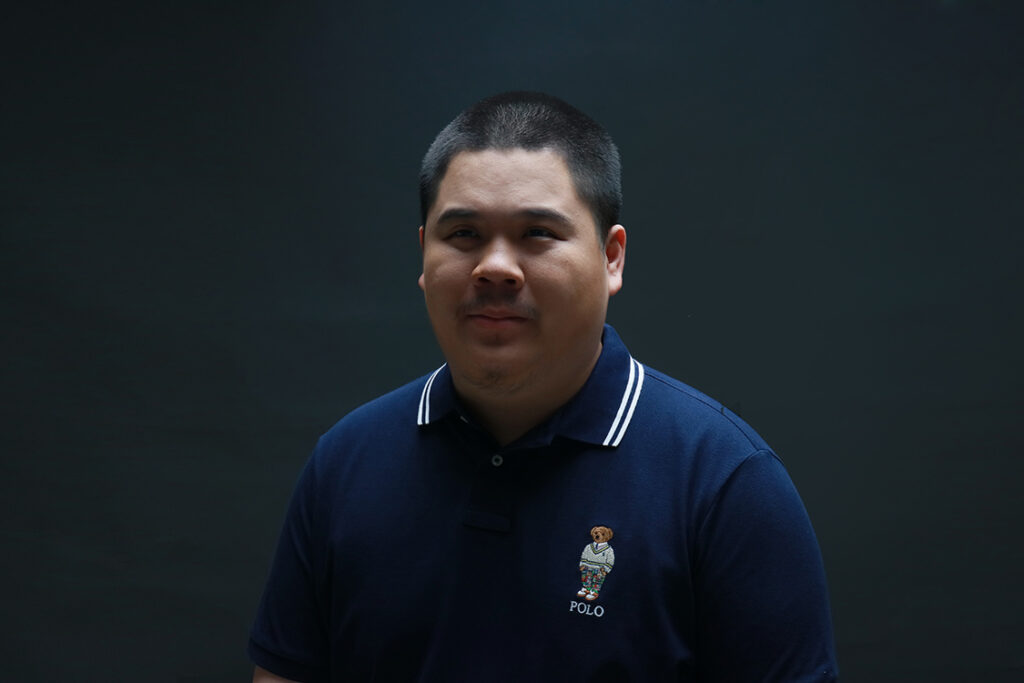
Chan Chun Chun (Chan Chun Sing) is a Chao Ah Gua who harassed me with police car, police arrests and false sectioning arrest by mental health goons that framed me. I do admit I have schizophrenia but very mild one, but what they did to me was pure evil, heavy sedation, sexual abuse and humiliation at the mental health institution that I was falsely locked up in. Chan Chun Chun 你这一个臭阿瓜,只有一粒球,没种,只会欺负好人。
Author: onzirui
-
Chan Chun Sing and Xi Jinping’s retaliation on my negative posts on them that were starting in 2017, and they have employed tactics on me since then.
Chan Chun Sing’s Harassment, My Grandma has admitted to me that after I had posted bad things on Chan Chun Sing and Xi Jinping starting on 2017, Chan Chun Sing started sending police cars to harass me on a daily basis videos and images in which he forcefully deleted later with the help of his goons. Xi told my Chinese relatives to tell my family to deal with me, forced framings and lock up into Singapore’s Mental Health Institution under false accusations ! I was framed ! Everyone who came to this webpage please save these evidences. I will likely have images and videos posted or links with images and videos. Please save them. Please show of force to both of these evil people through small means let them be on their toes, don’t sacrifice your lives in a hard clash yet.
-
Communist Xi and Stinky Ah Gua Chan
Communism history, from now on I can’t go to China anymore, take note from now on never go to China. Never go to China.
The Great Chinese Famine (Chinese: 三年大饥荒; lit. ‘three years of great famine’) was a famine that occurred between 1959 and 1961 in the People’s Republic of China(PRC).Some scholars have also included the years 1958 or 1962. It is widely regarded as the deadliest famine and one of the greatest man-made disasters in human history, with an estimated death toll due to starvation that ranges in the tens of millions (15 to 55 million). The most stricken provinces were Anhui (18% dead), Chongqing (15%), Sichuan (13%), Guizhou(11%) and Hunan (8%).
The Cultural Revolution was characterized by violence and chaos across Chinese society. Estimates of the death toll vary widely, typically ranging from 1 to 2 million, including a massacre in Guangxi that included acts of cannibalism, as well as massacres in Beijing, Inner Mongolia, Guangdong, Yunnan, and Hunan. Red Guards sought to destroy the Four Olds (old ideas, old culture, old customs, and old habits), which often took the form of destroying historical artifacts and cultural and religious sites. Tens of millions were persecuted, including senior officials such as Liu Shaoqi, Deng Xiaoping and Peng Dehuai; millions were persecuted for being members of the Five Black Categories, with intellectuals and scientists labelled as the Stinking Old Ninth. The country’s schools and universities were closed, and the National College Entrance Examinationswere cancelled. Over 10 million youth from urban areas were relocated under the Down to the Countryside Movement.
Struggle sessions (Chinese: 批斗大会; pinyin: pīdòu dàhuì), or denunciation rallies or struggle meetings, were violent public spectacles in Maoist Chinawhere people accused of being “class enemies” were publicly humiliated, accused, beaten and tortured, sometimes to death, often by people with whom they were close. These public rallies were most popular in the mass campaigns immediately before and after the establishment of the People’s Republic of China, and peaked during the Cultural Revolution (1966–1976), when they were used to instill a crusading spirit among crowds to promote Maoist thought reform. During the Red August of Beijing in 1966, notable intellectuals such as Lao She and Chen Mengjia committed suicide after being humiliated and “struggled against”. Methods of torture and slaughter during the Daxing massacre included beating, whipping, strangling, trampling, and beheading; in particular, the method used to kill most infants and children were knocking them against the ground or slicing them in halves.
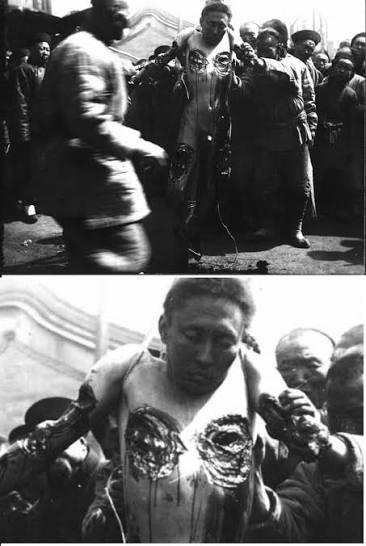
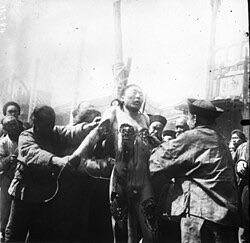
Physical torture such as burning, limb amputation, hanging, and beating were
also widely used prior to the actual killing. In Guizhou’s Huishui County, a man named Xie Caoxiang was arrested simply because he had visited a landlord in the same village. Being charged with the crime of liaising with counter-revolutionaries, he was repeatedly hanged and beaten. Eventually he died while his body was hanging on a pole.5 The violent atmosphere incited fear as well as rage. In Western Sichuan, at a public trial of a counter-revolutionary,
the angry crowds jumped on the accused. After repeatedly beating him with wooden clubs and stone, in the chaos that followed the poor man had his eyes gouged out. atmosphere of disintegration’.7 All of a sudden, the old rule of the world had ceased to apply.
Gone with it was the moral balance between right and wrong and between good and evil.
Some interpreted Revolution in their own light. In many areas, the Land Reform turned out to be an exercise in looting others. Hatred began to play a central role in everyday human interaction as well as in public affairs. Everyone was pitted against everybody else, most of
all against their next-door neighbours, their fellow villagers. Many villagers took up violence in almost medieval fashion. In central and south China, for example, under the disguise of the Revolution or the Land Reform, the bloody feudal style of clan fighting was rife. Hundreds
indeed thousands were brutally murdered as result. Protected by the local command of the Public Security Police or village militia, known as the Peasant Association (nonghui), villagers of one clan openly robbed fellow villagers from another.8 In addition to landlords
and rich peasants, many middle-level peasants were also targeted. In China’s southwest, in Yunnan province’s Zhanyi County, seventy villagers were tortured to death within twenty days during the Land Reform in 1951. One landlord was beaten to death simply because a fellow villager wanted his trousers.9 In Guizhou province’s Wuchuan County, a region with a predominantly Miao and Gelao ethnic population, a seventy-year-old local peasant Zhang Baoshan was butchered after had been falsely classified as landlord in the Land Reform in
1951. His two sons sought revenge for their father’s death. One son was caught and hacked to death by two fellow villagers with an axe, the other son Zhang Ren’an was besieged by a group of revolutionary activists in the village and then hanged. After Zhang Ren’an’s death, they chopped off his tongue and sexual organ and burned his body. The rest of the family was also arrested and brutally tortured by local cadres and villagers.10 In some cases, the party had to intervene to save landlords from sheer butchery, though killing and looting were allowed
as long as they were done in what, according to the authority, was labelled a civilized manner. In Southern Sichuan’s Zizhong County, for example, during the Land Reform more 400 people were beaten to death within 10 days. Most of those being killed were not landlords or
counter-revolutionaries. They were beaten to death simply because someone else in the village hated or envied them.